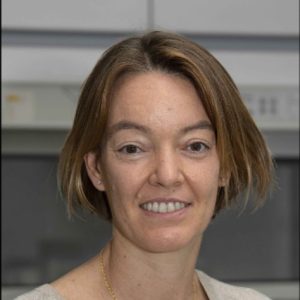
 Ana O’Loghlen obtained her BSc in Biology and her PhD in Biomedicine from the University Complutense of Madrid (Spain). Her work focused on unveiling the role of the novel MAP kinases- termed Mnks- in the context of brain ischemia. She obtained more than 5 first author publications from her PhD. She was also a visiting scientist at the University of Dundee under the supervision of Dr Christpher Proud.
After her PhD, she was recruited to the Spanish National Cancer Research Centre (CNIO) under the supervision of Dr Angel Nebreda. She later moved to Imperial College London (UK) to work in Dr Jesus Gil´s lab where her work focused on understanding the cellular phenotype senescence. During this period, she performed several functional screens to identify novel regulators of senescence, where she identified immune cell regulators (Cell 2008, Cell Cycle 2008), microRNAs (Cell Stem Cell 2012, Ageing Cell 2015) and epigenetic regulators (EMBO J 2013,Trends Cell Biol 2014, Oncogene 2015). After a brief period at the former London Research Centre (Francis Crick Institute) with Gordon Peter she was recruited as a group leader in Queen Mary University London (UK). Since then, her lab continues to unveil the basic mechanisms regulating senescence and its influence within its microenvironment. Our latest work has identified additional novel regulators of senescence such as integrin beta 3 subunit, ITGB3 (Cell Reports 2017). In addition, we found a role for the interferon (IFITM3) and glutathione (GSTM2) pathways in senescence and ageing via intercellular communication through extracellular vesicles (Cell Reports 2019, Cell Metabolism 2020, Trends Cell Biol 2020, Ageing Cell 2021). More recently, by performing a genome-wide CRISPR/Cas9 screen we have identified two genes implicated in the coagulation pathway – the coagulation factor IX (F9) and Protein Z Vitamin K Dependent Plasma Glycoprotein (PROZ) – whose loss prevent the induction of senescence. We believe these markers could be used to predict patient response to CDK4/6 inhibitors improving the efficacy of cancer treatments and overall disease outcome (Cell Death Dis 2022).
The O’Loghlen lab is committed to the training of scientists with different levels of expertise. Associated to the SenesceX project is a PhD student, an MSc student and a lab technician who carries her own lab project.
The CIB has all the necessary infrastructure for the development of this project, from cell culture facilities, to animal housing services, imaging and holds an excellent electron microscopy facility.
CONSORTIUM FINANCED BY: