GROUP CNIO-TM

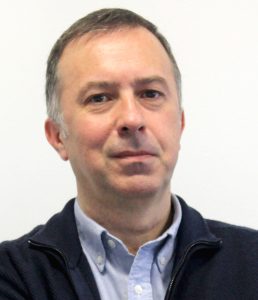
Ignacio Palmero graduated in Biological Sciences at the Universidad Complutense de Madrid and obtained a PhD degree in Molecular Biology from the Universidad Autónoma de Madrid.

He did postdoctoral stays at the Imperial Cancer Research Fund, London, UK and Centro Nacional de Biotecnología, Madrid, Spain. In 2002 he obtained a staff scientist position of the Spanish Research Council (CSIC) at the Institute for Biomedical Research Sols-Morreale, Madrid. The main focus of his research is to understand the program of cellular senescence and how its malfunction leads to human disease, with the aim to exploit this knowledge for diagnosis and therapy.

Throughout his career, Ignacio Palmero has made significant contributions to this field, including the identification of the ARF-p53 axis in oncogene-induced senescence, the role of senescence in fibroblast plasticity and, more recently, the link between embryo senescence and developmental disease. He is a member of the International Cell Senescence Society, ICSA, and has participated in the Scientific Committee of several ICSA meetings. He currently serves as member of the Steering Committee of the Spanish Society of Cell Senescence, Senescel.
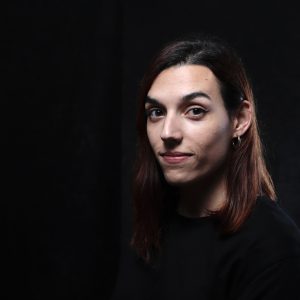

Nuria Casa Rodríguez completed her bachelor’s degree in Biology in 2018 at Complutense University of Madrid. In 2019, she did a Master’s degree in Genetics and Cell Biology at the Complutense University of Madrid, Autonoma University of Madrid and the University of Alcalá. In 2021 she completed an MSc in “Cancer Research & Precision Oncology” at Glasgow University.

During these last few years, she has done different research placements in Spain and abroad. She worked in the Center for Biological Research (CIB, CSIC), and the Spanish National Cancer Research Center (CNIO) in Madrid, Spain and at the CRUK Beatson Institute, Glasgow, UK.

Nuria joined the Cellular Senescence and Tumor Suppression lab at the Instituto de Investigaciones Biomédicas Sols-Morreale (IIBM, CSIC-UAM) in 2022, where she is currently conducting her PhD research. Her work focuses on the study of how the dysfunction of the physiological program of cellular senescence during embryogenesis can lead to developmental defects.

PROJECTS (LAST 5 YEARS)

  • Título: Análisis del papel de la senescencia celular en fisiología y enfermedad. Agencia financiadora: AEI, PID2024-155945OB-I00. Duración: 2025-2027. Investigador principal: Ignacio Palmero.
  • Título: Senescencia celular en fisiología y enfermedad. SenesceX. Agencia financiadora:17Comunidad de Madrid, P2022/BMD-7393. Duración: 2023-2027. Eva González-Suárez (consorcio de 5 laboratorios).
  • Título: Senescencia y plasticidad celular. Agencia financiadora: AEI, PID2021-122600OB-I00. Duración: 2022-2025. Investigador principal: Ignacio Palmero.
  • Título: Senescencia celular: mecanismos y terapias (Senestherapy III). Agencia financiadora: AEI, RED2018-102698-T. Duración: 2020-2022. Coordinador: Manuel Serrano (consorcio de 8 laboratorios).
  • Título: Senescencia y plasticidad celular en fisiología y enfermedad. Agencia financiadora: AEI, RTI2018-098520-B-I00. Duración: 2019-2021. Investigador principal: Ignacio Palmero.

          THESIS (LAST 5 YEARS)

          • Cristina de Lope, UAM, 2021
          • Nuria Casa, UAM, en marcha
          • Paula Hernández, UAM, en marcha
          • Laura Arranz, UAM, en marcha

          MERITS & RESPONSIBILITIES

          • Coordinador de la Red de Excelencia “Senescencia celular: de mecanismos a terapias” (2017-2019).
          • Organizador de la Tercera Reunión Anual de la Red (Madrid, 2017).
          • Co-chair del Simposio “Aging and Senescence”, XVIII Congreso SEBC, Badajoz (2019).
          • Miembro del comité científico de los congresos ICSA Santiago de Compostela (2015), ICSA Osaka, Japón (2021) y SENESCEL Santiago de Compostela (2024).
          • Director del Departamento de Biología del Cáncer del Instituto de Investigaciones Biomédicas (2009-2013).
          • Miembro de la Junta Directiva de la Sociedad Española de Senescencia Celular (SENESCEL) desde 2023.
          • Co-coordinador del Topic 3 – Working Group 1 en la Acción COST de la UE “Senescence2030” desde 2023.
          • Revisor externo para Genes and Development, Cancer Research, EMBO Molecular Medicine, EMBO Journal, EMBO Reports, Aging Cell, Molecular and Cellular Biology, PLOS Biology, FEBS Letters, Journal of Cell Science, Scientific Reports, entre otras.
          • Evaluador externo para agencias nacionales e internacionales: AICR, BBSRC, German-Israeli Foundation for Scientific Research and Development, Institut National du Cancer (Francia), ANR (Francia), AEI, ISCIII, Comunidad de Madrid, Junta de Castilla y León, Junta de Andalucía, AECC y La Caixa.
          • Miembro de paneles de evaluación de proyectos y contratos en ISCIII y AEI.

          RELEVANT PUBLICATIONS

          • Dysfunction of programmed embryo senescence is linked to genetic developmental defects.
            de Lope C, García-Lucena R, Magariños M, León Y, Casa-Rodríguez N, Contreras N, Escudero-Iriarte C, Varela-Nieto I, Maire P, Palmero I.
            Development. 2023 May 1;150(9):dev200903. doi: 10.1242/dev.200903. Epub 2023 May 3.
            PMID: 37017267 Free PMC article.
          • Cell Death Dis. 2025 Jul 12;16(1):519. doi: 10.1038/s41419-025-07854-z.
          • Mol Oncol. 2025 Apr;19(4):1265–1280. doi: 10.1002/1878-0261.13773.
          • El Motiam A, Bouzaher YH, Chen H, Seoane R, Vidal S, Blanquer M, Tolosa RM, Rodríguez-Lemus B, Herrera-Gavilán JA, Vidal A, Palmero I, Rodríguez MS, Sutherland JD, Barrio R, Xirodimas D, Collado M, Bremner R, Rivas C. SUMOylation of the lysine-less tumor suppressor p14ARF counters ubiquitylation-dependent degradation. Cell Death Dis. 2025 Jul 12;16(1):519.
          • García Flores N, Fernández-Aroca DM, Garnés-García C, Domínguez-Calvo A, Jiménez-Suárez J, Sabater S, Fernández-Aroca P, Andrés I, Cimas F, de Cárcer G, Belandia B, Palmero I, Huertas P, Ruiz-Hidalgo MJ, Sánchez-Prieto R. The CDK12–BRCA1 signaling axis mediates dinaciclib-associated radiosensitivity through p53-mediated cellular senescence. Molecular Oncology (2024).
          • De Lope C, García-Lucena R, Magariños M, León Y, Casa-Rodríguez N, Contreras N, Escudero-Iriarte C, Varela-Nieto I, Maire P, Palmero I. Dysfunction of programmed embryo senescence is linked to genetic developmental defects. Development. May 1;150(9):dev200903.
          • Palmero I, Gorgoulis V, Varela-Nieto I. Editorial: The Role of Cellular Senescence in Health and Disease. Frontiers in Cellular Neuroscience 16. doi: 10.3389/fncel.2022.882417 (2022).
          • López-Antona I, Contreras-Jurado C, Luque-Martín L, Carpintero A, González-Méndez P, Palmero I. Dynamic regulation of myofibroblast phenotype in cellular senescence. Aging Cell e13580. doi: 10.1111/acel.13580. Online ahead of print (2022).
          • Benítez S, Cordero A, Santamaría PG, Redondo-Pedraza J, Rocha AS, Collado-Solé A, Jimenez M, Sanz-Moreno A, Yoldi G, Santos JC, De Benedictis I, Gómez-Aleza C, Da Silva-Álvarez S, Troulé K, Gómez-López G, Alcazar N, Palmero I, Collado M, Serrano M, Gonzalez-Suarez E. RANK links senescence to stemness in the mammary epithelia, delaying tumor onset but increasing tumor aggressiveness. Dev Cell 56, 1727-1741 (2021).
          • Varela-Nieto I#, Palmero I# & Magariños M#. Complementary and distinct roles of autophagy, apoptosis and senescence during early inner ear development. Hearing Research 376, 88-96 (2019).
          • De Lope C, Martin-Alonso S, Auzmendi-Iriarte J, Escudero C, Mulet I, Larrasa-Alonso JJ, Lopez-Antona I, Matheu A & Palmero I. SIX1 represses senescence and promotes SOX2-mediated cellular plasticity during tumorigenesis. Scientific Reports 9, 1412 (2019).

          CONSORTIUM FINANCED BY:

          Contact: 91 999 99 99 | contact@proyect.com